It’s not unusual for one to see “Korea” and “corruption” in the same sentence—especially if they are found hand-in-hand in the headline of a newspaper.
Slave contracts and sponsorship aside, the newest scandal in Kpop—which reached the printed media July of this year—has to do with good old fashioned payola:
Twenty-nine people, mainly radio and cable-TV staff, have been arrested on suspicion of accepting cash payments in return for airplay or fraudulent chart positions. New artists and their managers, keen to start their careers off with a hit, were the most frequent customers: Incheon Metropolitan Police believe that between April 2009 and May of this year, around a hundred wannabe singers paid a total of 150m won ($143,000) to several producers and the chairman of a cable-TV company. Such sums are dwarfed by the 400m won or so allegedly collected by the operator of a website that compiles a chart based on the number of radio plays each single receives. According to police, the unnamed 60-year-old took the money from singers and pop managers, promising six-month stays in his dubious top ten, for a price of 38m won each.
Others received money for songs that nobody ever heard: six employees of one radio station apparently fiddled with playlists in order to add songs to the charts which had never actually been aired.
Desperate Kpoppers trying to pay their way to the top. The perpetrators here, however, are the individuals accepting the bribes, accused of exploiting rookie talent. The problem isn’t just that they took the money, but, in some cases, they failed to deliver on their promises (i.e. they lied). Clearly, this is pretty underhanded stuff, so shame on them for lying, cheating, and stealing. Yet, the managers and newbie artists still offered up their hard earned won for a presumed advantage over their competition. There must be an ethical (and legal) problem with being the briber, right?
There sure is.
In 2002, entertainment companies like SM Entertainment were called into question for bribing network television and cable stations to showcase particular acts. A Time Magazine article that covered this story illuminates the possible reason why these companies may in fact feel justified in resorting to seemingly dubious behavior:
Indeed, with competition in the industry growing fierce, buying exposure for your stable of stars is becoming almost a necessity. The success rate for new acts is low. Perhaps one in 20 make it, but producers have investments to protect. By the time budding superstars are ready to go public, at least $50,000 may have been sunk into their grooming. To have any chance of a return, artists need exposure on radio shows and in the tabloids that cover the entertainment industry. Most important are appearances on the 20 or so entertainment shows run by the big three television networks — MBC, KBS and SBS — and on a few prime cable music-video shows. The exposure can cost more than $350,000, most of it for television. Producers consider it a bargain — the same amount spent would buy just 10 minutes of prime commercial advertising time, barely enough for three songs.
Getting plugged into the TV circuit is key to pushing your wannabe heartthrobs up the music charts. Run by TV stations, the charts provide a much-watched yardstick to gauge band popularity. But some say the charts are slanted in favor of the stars who make the most small-screen appearances — in Korea, rankings are only partly based on CD sales and fan voting. That makes TV appearances all the more important. “Bribing is marketing,” says an industry official. “With the least amount of money, you get the most effect.”
Bribery, then, equals more bang for your buck. And while it is technically illegal, it is still generally accepted by those in the entertainment industry as common business practice. With the way Kpop acts are produced, it makes sense that payola is considered the quickest and surest way to earn back enough money to ensure profit and satisfy investors. Yet, there are Koreans who recognize corruption in a business that has international attention can be detrimental to the longevity of its success:
Shady business customs could stifle development over the long term, says Lee Sang Ho, the television journalist who produced the MBC K-pop expose. While other Korean industries have been bringing their business practices up to global standards, the pop music industry remains stuck in the past, Lee says. “The main problem is a lack of transparency. This has to be said for the betterment of the Korean mass music industry.”
Ok wait…what? “While other Korean industries have been bringing their business practices up to global standards, the pop music industry remains stuck in the past.” So trading money and gifts for favors and special privileges is traditional South Korean behavior?
Yes, it would seem that it is.
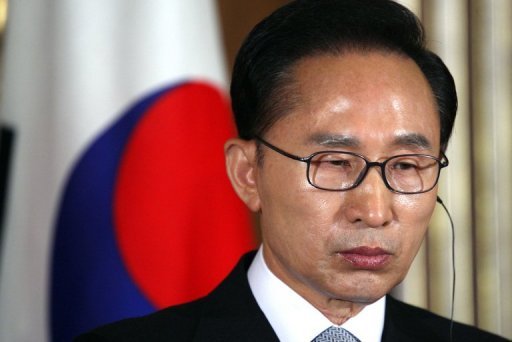
For years scandalous money exchanges have been discovered within business and politics with no real repercussions. South Korea may have been praised last year for its quick transformation “from military rule to a boisterous democracy,” but even now there is still a lot of malfeasance occurring in virtually every sector of society. South Korean President Lee Myung Bak tells the rest of the world that he is pushing for a “fair society” and will punish corrupt behavior. “The overall standard of Korea has definitely improved,” he said. “But even though the world looks at us with a greater respect, there are still parts of Korea that seem to reflect an era when Korea was much more backward than it currently is.”
A recent article from the Associated Press shows that this “backward” behavior is largely based on their Confucian belief system:
The problem is embedded in the country’s bureaucracy and its Confucian-based culture that emphasizes family connections, regional ties and friendships forged in school, said Kim Taek, an expert in public administration ethics at South Korea‘s Jungwon University. “Corruption in Korea is a kind of time-honored tradition without which social success would be almost impossible.”
In a 2009 Asia Times Online article discussing corruption in politics, scholar Kim Sung-hak of Hanyang University backs this idea: “Corruption is condoned at the highest level. Korean culture is a social relationship, not a written contract.” He explains, “Confucianism was the governing social philosophy…Here the personal guarantee carries more weight than an employee contract. Employees are not supposed to betray the president of the company.” At the heart of it, bribery is associated with respect and honor. It’s not a “payoff” but a sincere gift given with the expectation that the kindness will be returned in the form of a personal favor. At least in theory.
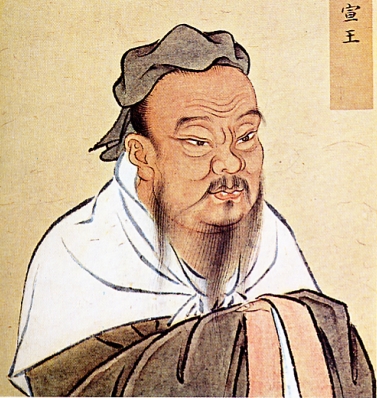
With that said, South Korea has been increasingly globalized for quite a while. Sociology proves that tradition is part and parcel of social mores which are ingrained in society, and thus its citizens, but international industry leaders like those in Kpop certainly know that the world frowns upon nefarious behavior. The U.N. has told them enough. So Confucianism’s connection to corruption is far from an excuse for any of their poor behavior. However, it does help explain why more Koreans aren’t outraged by the news, and why the transgressors rarely receive any substantial punishment.
It may take a while, but the more Koreans grow tired of the scandals, the faster that “new pattern” professor Ha mentioned 16 years ago will materialize. Let’s just hope it won’t be too many decades longer.