120213_seoulbeats_smfamily

K-pop and Consumer Nationalism

31

If you are a K-pop fan, it is seemingly impossible to avoid talk of Hallyu and, especially these days, K-pop’s increasingly rapid expanse towards the American and Western markets.  Personally, I’d say that I’ve contributed almost nothing to this discussion so far except to say that K-pop in the West embarrasses me somewhat and contextually doesn’t really make sense.  But in all of our fervent speculation over whether or not anyone in K-pop is going to “make it” outside of Asia, somehow the question of what, exactly, Hallyu means to Korea as a society gets a bit lost.

I certainly don’t claim to be an anthropologist, sociologist, or anything of the sort, but I do acknowledge that an ethnographic approach to Hallyu — one that attempts to contextually understand Hallyu’s impact and how people on the ground see and experience it — is starting to make extraordinary sense in the social science world.  In fact, there is as of yet no definitive English-language ethnography on Hallyu, which is both good and bad; on the one hand, the field is completely open and practically brimming with possibility (which is excellent news for those of us in academia who maintain a robust interest in Hallyu, aka those of us who like to believe that we fangirl constructively); on the other hand, unless one is out there doing fieldwork and in the thick of it, any theories we might test or conclusions we might draw are largely speculative.  That in and of itself, however, shouldn’t keep us from exploring.

That K-pop is what it is — a glittery, opulent, extravagant LOL-fest of cuddly and fierce goodness — has often precluded efforts to probe more deeply into understanding its development and meaning in South Korea.  However, I’d like to put forth the idea that the export of Hallyu is actually deeply tied into consumer mentality and nationalism in South Korea.


In 2000, Laura C. Nelson, a researcher with MDRC, published an ethnography on consumer habits in South Korea entitled Measured Excess: Status, Gender, and Consumer Nationalism in South Korea.  As the title suggests, Ms. Nelson uses the work as an opportunity to introduce readers to the idea of consumer nationalism, which I define as the belief or understanding that there is a link, be it conscious or unconscious, between the choices we make as consumers and our ideas about our nation and nationalism.  South Korea makes a particularly interesting locale for research on this topic because, as Ms. Nelson points out, South Korea’s economic rise has been staggering in its pace (following the Korean War, 1950-1953, South Korea was poorer than Ethiopia; it is currently the 15th largest economy in the word) and the polices that were implemented to achieve such monumental growth created an environment in which the act of consuming, or spending money/purchasing goods, was inextricable from ideas of nation-building.

To grossly oversimplify matters (and I welcome any corrections/clarifications, for I am certainly no economist), South Korea was largely able to achieve a high growth rate due to heavily emphasizing exports, cutting down on imports, and encouraging the population to purchase Korean products as often and much as possible.  Did you know that there was a ban on the importation of Japanese cultural products, along with many other Japanese products, that only ended in 1998?  Although this ban is very much tied into anti-Japanese sentiment whose historical roots are far beyond the scope of this post, the idea is clear: by reducing the number of imports, South Korea allowed domestic competition, products, companies, and markets to flourish.  As such, Korean products themselves (and the way they were consumed by the masses) became imbued with a nationalist character and were sometimes even seen as points of pride, most notably when these products were consumed at large in other countries (here I refer mostly to electronics like those manufactured by LG and Samsung  as well as cars produced by Hyundai and Kia).

If you managed to get through that little history lesson, good for you; I’m finally going to talk about K-pop now.  Regardless of K-pop’s origins, it is now fair to say that K-pop is often understood as a product of Korea, and the consumption of K-pop has not only contributed enormously to South Korea’s domestic economy, but has made a definite splash across Asia.  Though it has been 12 years since Ms. Nelson’s book has been published (and I just threw up a bit thinking that kids born in 2000 are now in junior high), South Korea’s attitudes towards consumption are not radically different today.  South Korea’s rapid rise continues to contribute to the nationalist discourse surrounding consumption, spending, and exports.

And now K-pop stands poised to be South Korea’s newest cash-cow export to the West.

As someone who has lived and done research in South Korea, it’s not difficult for me to identify Korean brands that have become household names in the US, where I was born and raised.  I know that my father’s Samsung cellphone is Korean; I know that my own Motorola is not.  I know that our LG refrigerator is Korean (and I know that LG does not stand for “Life’s good”), but I don’t know if my father does.  My father drove a Kia for about 5 years and I don’t think it ever dawned on him that it was made by a Korean company.  My point?  Given the way that Samsung, LG, Kia, etc. are marketed in the US, it isn’t immediately obvious — and may never become obvious — that these companies are Korean.  This is definitely not the case with K-pop.  As a cultural export, K-pop will be understood and judged overseas as a wholly Korean product — and its success (or failure) may, along those lines, be understood in South Korea as a success (or failure) of Korea itself.

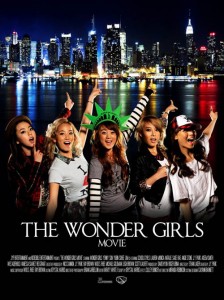
K-pop doesn’t necessarily just have the fortunes of the entertainment companies hanging in the balance of its Western expansion; it also carries with it the pride of a nation whose consumer experiences are still very much tied to ideas of Korean nationalism.  I’m not Korean, and I in no way intend to speak for Koreans themselves, but  I can only imagine how Koreans (particularly those who have memories of growing up in far leaner times) feel when they hear of K-pop’s overwhelming success in Japan, which has been dubbed a “backwards” flow, given the dominance of Japanese popular culture following the aforementioned lifting of the ban in 1998.  I can also only imagine how they must feel hearing that their national sweethearts, SNSD, somehow managed to make it onto two nationally syndicated American television programs, or that the Wonder Girls starred in a made-for-TV movie on TeenNick, or how Rain won the 2010 MTV Movie Award for Biggest Badass Star due to his work in Ninja Assassin.  Think about the number of “butthurt” or “delusional” comments that we see not only here on Seoulbeats, but on other K-pop forums and pop culture websites — while it’s possible and likely that a lot of the commenters really are just butthurt fans, it’s also possible and likely that the motivation behind such fierce defense of K-pop and Hallyu stars is linked to K-pop’s associations with Korean nationalism and pride.  A condemnation or criticism of K-pop can, in this light, be seen as a condemnation of South Korea or Korean culture itself — and that’s bound to provoke some pretty fierce sentiment.

I’ve done my fair share of scoffing (and will likely continue to do so) about K-pop and Hallyu’s continued westward expansion, but lest I get too snarky, it behooves me to take a step back and remember that it’s not just a bunch of girls who wear hot pants and sing off-key that South Korea is exporting; it’s a product that, regardless of K-pop’s actual ties to indigenous Korean culture, has nonetheless become a Korean cultural product of our time.  We may laugh or cringe at the idea of SNSD on Letterman, but for a country that had nothing just six short decades ago, the selling of this Korean product abroad is a phenomenal achievement that is deeply tied to long-standing ideas about the Korean nation.  And in that regard, I have no choice but to wish it the best.

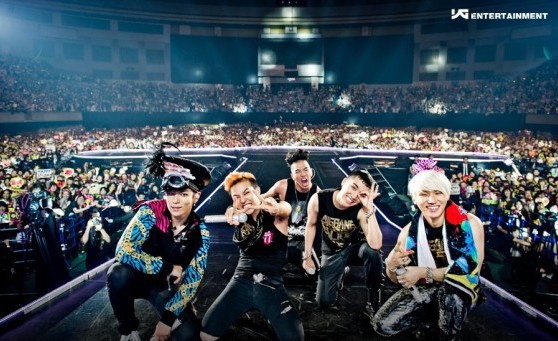
(SM Entertainment, Laura C. Nelson, Measured Excess: Status, Gender, and Consumer Nationalism in South Korea (New York: Columbia University Press, 2000), Park Jae-bok, Hallyu, The Global Generation’s Cultural Competitiveness/한류, 글로벌 시대의 문화경쟁력  (Seoul: Samsung Economic Research Center, 2005))
Related Posts

  • Destinya

    For me the fact of Hallyu was always a setback.
    I understand their nationalism and all but the whole “spread the Hallyu” has always been a turn off when it came to kpop.
    With the expansion of kpop I’ve always viewed it as a weakness.
    Trying to break into another nation (especially bigger nations) with this here we are with our precious Korean ways doesn’t fly.
    And then as for the nationalism of the Korean people these groups go to these other nations and change style, change LANGUAGE-where does the Hallyu come in? Is the Hallyu just a play for Korean backings?

  • Mika~

    To be honest, the most annoying aspect of KPOP, aside from the overrated untalented artists and the underrated talented artists (which happens in music industries all around the world, I’m sure), is the nationalistic feelings that follow the Hallyu Wave.

    Like the author, I understand that (generally speaking) South Koreans tend to be very proud of their country for advancing so rapidly, and I commend South Korea for having developed so quickly. However, the media and netizens often portray KPOP success in foreign countries (i.e. Japan, and in the small, niche markets of Europe and U.S.) as if KPOP has taken over and conquered the country, and as an extension of KPOP, they seem to think that Korea has conquered that foreign country, too, even if it’s only in a cultural sense. Disregarding the fact that these successes are often exaggerated, I would like to point out that, despite my role as a KPOP consumer and fan, I don’t like the feeling of being conquered – who does? And since the conqueror is considered superior to the conquered, if me being a KPOP fan leads to South Koreans believing that they are superior to me, do I really want to continue being a KPOP fan?

    I suppose that as a non-Korean, I have my own feelings of nationalism for countries other than Korea, and while I agree that South Korea has made spectacular advancements within the past half-century or so, I wonder if too much South Korean nationalism will eventually play a role in impeding KPOP’s expansion.

    • Anonymous

      No one likes feeling conquered and a lot of people on this planet feel being conquered by American culture. I guess that some of those people will welcome some Korean competition, also because South Korea is a small country so it will never look so threatening as America does look.Who does seriously fear Korean nationalism on this planet? Not so many people do. Who does seriously fear American nationalism on this planet? A lot of people do. Justified or not. Maybe the Korean nationalism is a big showstopper in America but that doesn’t have to mean that it is also a showstopper in other parts of the world.  

    • YesNo

      “…they seem to think that Korea has conquered that foreign country, too, even if it’s only in a cultural sense.”
      This is what’s so problematic for me. It stems from the maketing of the Hallyu wave as “better” rather than “different”. Creating competition with other countries rather than working along side them. On a smaller scale, the US vs. Them mentality runs rampent in fandoms where K-fans are automatically seen as better than, more loyal than, and more deserving of attention than international fans….just because they are Korean. 

      What I also find interesting is the while the Hallyu wave continues to be exported into other countries, Korea is still pretty unwilling to accept imports. The general treatment and attitude towards foreigners is horrendous. So what good is all this attention for Korea if foreigners who visit are still treated badly there? 

      • Anonymous

        What do you mean with working alongside them? How does American entertainment differ? 

        • YesNo

          “What do you mean with working alongside them?”I mean presenting Kpop as music that can coexist along side American Pop rather than music that is BETTER than American Pop

          “How does American entertainment differ?”
          It doesn’t…that’s my point. KPop is no better or worse than American Pop.

          *note: I’m only using American Pop as an example because I’m from the U.S., but this could apply to any other country. 

          • Anonymous

            American pop is also presented as better by Americans to other people in the world. Americans have a very high self esteem in general. People in other cultures often don’t have such high self esteem. American culture is a winner takes it all culture (no time for loosers) and American are very skillful in marketing. Look how successful McDonalds is! 

            I’m sorry but I don’t see American culture as a ‘working alongside culture’. American society isn’t a soft society.  

            American artists like Beyonce make a ginormous amount of money. A lot of that money comes from outside America. Yes, I know she works very hard for it but so do Yoona and CL. 

            American culture is extremely dominant on a global level. I really think that Americans have nothing to complain about. And the fact that many people know English gives American artists a humongous advantage. 

          • YesNo

            …Okay? But what does all of this have to do with KPop?

          • Anonymous

            Well, you did care about ‘along side’. Do American artists do ‘along side’? 

          • YesNo

            Again…what does what American artists do have to do with Korean Nationalism in the spread of the Hallyu wave? 

            If you want to argue about America and its politics you will have to do so elsewhere, that is a completely different topic.

            Please don’t let your feelings about America (which have become pretty clear through this back and forth) override your common sense. 

            My point, which you seem to be missing though I’ve made it clear several times, is that KPOP cannot market itself as “better” than American Pop if it wants to succeed here…PERIOD. 

          • Anonymous

            What do you mean 

            with “here” in “to succeed here”? America or the Western world? Other parts of the world? 
            Don’t you think that Korean artists copy or try to copy what American artist do? Same with entertainment companies and marketing. How can’t it matter what American artists do?
             

          • YesNo

            My point, which you seem to be missing though I’ve made it clear several times, is that KPOP cannot market itself as “better” than American Pop if it wants to succeed here…PERIOD.

          • Anonymous

            I absolutely don’t think that modesty will work. 

            And do American artists do modest? Or ‘along side’?Korean artists will often do or try to do what American artists do. 

            And again what is your ‘here’?

          • YesNo

            The point….you’ve missed it….yet again….

  • Chanting

    It wasn’t until I did a research on the KPOP audience for one of my assignments in university that I came to understand the political and economical motives behind the success of my favorite KPOP stars. I completely agree with the writer that KPOP/Hallyu does have other motives outside the interests of the music or the idols at hand. And I’m not sure how I want to feel about that yet.

    On the one hand, it’s very easy to see that ‘Hallyu’ is a label, exaggerated and branded onto stars who have reached ‘international’ success – case in point – Rain, and the often ‘butthurt’ or delusional fans that I often see spamming the youtube comments section. No doubt that Rain ventured into le-USA and starred in a Hollywood movie. But if you think about that success in terms of how the movie, and Rain – is received in the US rather than Korea – there’s a big gap…What do these fans, outside Korea, view him as? It’s quite different, and probably less nationalist compared to Korea and the Cloud fans themselves. On the other hand, these idols and KPOP itself, is so carefully manufactured that, unless you are critical and not as receptive to what the media, and in this case – KPOP churns out – you rarely would be able to know what KPOP is trying to make people feel.

    It’s not just influencing local KPOP fans, but international KPOP fans too – otherwise why would there be such an outburst from fans at the kids in “Kids React to KPOP” video? As international fans, we only relate to idols through the Internet, a completely mediated experience, but we feel like we understand the idols as much as local Korean fans do – that we (ok, maybe not we, but some) feel we need to defend our bias, and scoff at people who do not appreciate KPOP for its uniqueness.

    Isn’t that reaction similar to what KPOP is doing for the local fans? It is not only to make local fans feel proud of their KPOP idols’ achievements, it is also to draw foreigners’ attention to the country known as Korea – even if it is through the likes of nine pretty girls on David Lettermen’s show, or the five girls that starred in a Nickeldon movie – regardless of the reactions – SNSD and Wonder Girls are putting not just their names, but also the country they’re from – out there – and that’s enough for Korea to brag and feel proud about, that’s just how KPOP works to create consumer nationalism, which lead to many other profits – tourism – there’s an rising interest in flying to Korea now thanks to all the KPOP idols we see on Youtube.

  • happyslip

    In a sense, I’m starting to worry about their government’s increasing dependence to Kpop when it comes to their goals of making the “Korean” brand known all over the world. Among the things that they have used to promote Korea (movies/dramas and electronics), I find Kpop the weakest of them all — it’s way too trendy to maintain whatever influence it has. Sure it’s very popular now, but for how long? How influential is it anyway? Brand representation wise, I don’t even see it competing with say, the explosive popularity of Japanese animation — and we know that Japan’s not all about their anime, and yet that industry of theirs truly spawned a huge following all over the world that is still strong to this day.

  • Karasu_ne

    I wonder if people from other countries than the US are also feeling a little worried over the korean wave”? I mostly hear it from the Americans. Either way, coming from a latin american country (Puerto Rico) I dont find that idea of “conquering” countries with the media all that new or worth worrying about.
    Honestly, we all know these companies exagerrate. If anything, Hallyu, or rather, Kpop will only replace what popular japanese culture was at its peak. But thats just comming from a person with no korean political or economical knowledge.
    And a lot of people are in it for the kpop only, not the dramas etc. Probably when the kpop acts get older, the fad will die down. I dont think kpop will reach the heights its aiming for, but Im sure it’ll stay with a popular niche market in the future.

    • Karasu_ne

      Also, there is no avoiding feeling an attachment to your country’s “national” exports, even if you dont like them or care for them. Every artist somehow becomes a national representation of their country, whether they want to or not. Its only natural for countries to be proud and feel superior over their achievements. That doesnt make it right however.
      But if they are depending that much on this hallyu it will only mean they themselves will be feeling the backslash if it fails.

    • Anonymous

      I also think that those worries are something typically American and Japanese. Other parts of the world are completely used to cultural products from foreign countries. They have seen it before many times. 

      There are a lot of countries on the planet where home made cultural products are just a small percentage of the total cultural consumption. 

      People from those countries understand that Korea also wants to export its cultural products and they also understand that it isn’t easy for Korea. (Think of SNSD in that NY club). Americans often label themselves as courageous and rugged pioneers, well kpop is now pioneering into the West. 

      • Karasu_ne

        yeah. I can see both perspectives especially when thinking of kpop as a “cultural icon.” I imagine these countries might feel “threatened” by the new competition. But honestly, people buy what they like and no one should get in between that.

        And not everyone likes kpop, jpop or even american media. If its just that then I dont see why korea shouldnt take a swing, like latinos have done before.

        If there is some kind of hidden political agenda, then I wouldnt know what to say. But I guess we coul say that about all cultural exports.

        To me its more of the same, since Im not personaly invested in any of this. Asian media is something Im simply interested in, not something that I see in my daily life. And countries tend to favor their own people more, so I dont think any export is going to completely dominate the market.

  • Guest

    This article is not good.   It doesn’t make sense at all.   What are you trying to say ?

    If one wants to listen to and buy K-pop songs, so what ?   There is not much point of arguing whether K-pop and Korean nationalism are related to each other.    This is a consumer driven society.  If K-pop has something you like, then enjoy it.  If not, find something else.  

    K-pop has a niche market in Asia and is making a lot of money.  A book written in 2000 did not know the impact of social media  like Facebook, twitter, and YouTube.   Without the social media and social media marketing, K-pop would not be this successful.

    • Limao Luo

       I unequivocally agree; the connection drawn in the article is fairly irrelevant. The argument that the author makes is that having an export-driven economy makes Korea tie national pride to Hallyu, its (main?) export is fallacious, because it is based primarily on the fact that Korea is driven by exports. However, as of 2010, Korea has (according to Wikipedia) an estimated $466.3 billion worth of exports (ranked #6 in the world), and $417.9 billion worth of imports (ranked #8). It is true that Japanese imports were banned in the past, that the ban on Japanese imports was lifted partially in ’98 and then fully in ’04, and that Korea used to be export-driven to stimulate a struggling economy, but that isn’t reflective of the fast-changing Korean economy today. Also, it forgets that K-pop is, as the commenter above mentioned, a niche market, both in Asia and elsewhere (it has only brought in $4.2 billion in 2011, which is just 0.9% of the export market), and any parallels drawn are pointless. The crazy K-pop fans are just butthurt kids (90% of K-pop fans are seem to be tweens that seem to have nothing better to do than troll and complain), and nationalism is just an excuse for their behavior, and an altogether flimsy one at that, assuming that it really is the case that Hallyu is tied to nationalism.

  • YesNo

    @RC_RC:disqus 

    “I absolutely don’t think that modesty will work.”

    I didn’t say the hallyu wave needs to be “modest” I said, for the BILLIONTH time, it can’t be marketed as “better” – what don’t you understand about that?

    “And do American artists do modest? Or ‘along side’?Korean artists will often do or try to do what American artists do. ”

    Again, for the BILLIONTH time, I never said Korean artists need to be “modest”. ”And again what is your ‘here’?”

    Here = America, what I stated in my previous post. 

    I’m beginning to think that either you have trouble with reading comprehension or you are just arguing for the sake of argument. 

    Are you suggesting that Korean artist SHOULD present themselves as better than American artists when they debut? And that attitude will help them succeed…..seriously?

     If not then what exactly is your point? 

    • Anonymous

      I’m glad that you agree that modesty isn’t the way. 

      • Anonymous

        I guess it is better to market kpop to me as something that is better (at least in some aspects) than as someting that is different. It is simply not different enough. Kpop radiates a certain optimism, a sense of hope. I know that kpop isn’t really better at all aspects but it should be marketed to me as better and not as different. 

        I’m surprised that at least some Americans see kpop as something different. Why?

        • YesNo

          We will never agree and I don’t think we need to. Kpop will never succeed in America if they market themselves as better than American pop and by extension, better than America. Not. Ever. 

          • Anonymous

            I agree with you. Americans love individuals who at least APPEAR to be unique and different. The gimmicky thing that EVERY single kpop idol has would get annoying and old REAL fast. When I first listened to kpop idols I thought they were so whiny and annoying. But that slowly went with time. I still feel that way about ageyo at times. Because we are taught to outgrow such things in the west. But americans hate people showing up saying they are better than them. Unless all kpop artists are a whitney houston or christina or mariah, they can’t say that and get away with it. It won’t be accepted, it will be torn apart and MOCKED. Half the people in most (kpop) groups CAN’T sing. Or can’t Dance. And unless they’ve got something spectacular to back it up then they will be mocked…..terribly. I think saying they are better is not the way to go. They’ll NEVER EVER BE ACCEPTED, unless they are amazing and BEYOND edgy. I don’t think that describes kpop at all. They should go with different and see how that works out for them. Americans can work with different.

  • Anonymous

    “the consumption of K-pop has not only contributed enormously to South
    Korea’s domestic economy”

    according to billboard korea, 2011 music sales in korea was around two hundred million USD(sorry I cannot find the article right now).  total value of SK export in 2010 was  more than 400 billion USD.  Doesnt seem that big to me…

  • Anonymous

    You know K-pop for South Korea really is like a double-edged sword in this case. Because on one hand their economy and respect for their nation is growing, but at the same time they’re also now exposed to all these other nations, and ideals, and politics really. If Hallyu wasn’t as encompassing as it is now, would most people care that some K-pop stars don’t support gays? Or that blackface is still practiced? Now that the globalization of South Korean culture has taken effect, the nation and our favorite stars are now in a position of being extremely and widely criticized, and not just on singers who can’t sing. What I see springing from this is quite fascinating, to explain it I need a metaphor…GOT ONE: A home-schooled child is suddenly let out into college. 

    • Anonymous

      “a home schooled child suddenly let out into college” perfect decription of hallyu, if you meet most home schooled kids they’re polite towards adults but can’t socialize with their peers, couldn’t have said it better myself.

      • Anonymous

        RIGHT? And I totally know people like that and it’s not like they can’t function in society as a whole – still talking about kpop – it’s just that it’s a steep learning curve but if they’re willing to stick with who they are and embrace new ways of thinking they can do it.