Socio-Cultural
20120224_seoulbeats_kimtaehee

When Hallyu and Politics Collide: Korea, Japan, and Political Backlash

52

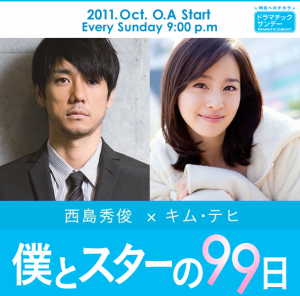
A few months ago, my fellow writer Young-Ji posted about actress Kim Tae-hee‘s recent plight in Japan.  To summarize briefly, Kim Tae-hee, who appeared in the Japanese drama 99 Days with a Star, came under fire for having apparently acted in support of South Korea’s claims to Dokdo, an island to which Japan also lays claim and calls Takeshima.  Without exaggeration, the territorial control issue surrounding Dokdo is one of the largest sources of tension between South Korea and Japan, and Kim Tae-hee’s tacit support for South Korea in regard to Dokdo/Takeshima led to protest in October and a massive petition against her working in the Japanese entertainment industry.

Well, it apparently hasn’t gotten any better for the actress on the archipelago; earlier this week, she was forced to cancel a promotional event in connection with her new commercial endorsement of Rhoto Pharmaceutical cosmetics.  The reason?  Hateful netizen comments accusing her of being anti-Japanese.  Though it has been four months since the initial wave of protest against her appearance in the drama (and indeed, six years since she participated in the “Love Dokdo” campaign), Japanese anger has yet to die down.

And it isn’t just Kim Tae-hee; 2PM’s Nichkhun, too, has been criticized for his most recent Thai CF, which briefly features an image of Japan’s Rising Sun flag, whose imagery has long been associated with the imperial Japanese army and its conquests and war crimes throughout Asia in the pre-World War II era.  The flag is still in use by the Japanese navy today.

While Japanese netizens have been calling the CF pro-Japanese, Korean netizens have responded by accusing Nichkhun of being anti-Korean.  So controversial was the commercial that it prompted JYPE to issue an official apology along with a promise to be more careful in filming and producing future CFs.

Far be it from me, or any outsider looking in to comment on the validity of sentiments on either side of the debate; the history between South Korea and Japan is long, bloody, and rife with justified grievance.  Japan’s 35-year occupation of the Korean peninsula was at times horrifically oppressive, including attempts at eradicating Korean culture and language as part of a forced assimilation project undertaken alongside the Japanese war mobilization.  Understandably, the numerous atrocities committed against Korea have left a bad taste in the mouths of many Koreans, and to this day there is still considerable resentment on both sides.  One questions what must — or really, what can – be done to mollify the situation.  The Dokdo/Takeshima dispute, which has been ongoing now for an extraordinarily long time, compounds these historical animosities.

Though cultural exchange between South Korea and Japan has been particularly robust for the past decade (and no doubt will continue to grow), it is worth remembering that (as Young-Ji put it) the very fact that Hallyu has spread to Japan with such success is nothing short of a miracle.  Anti-Japanese/anti-Korean sentiment is still deeply entrenched in both societies and is often perpetuated through the education system.  Though the older generation that remembers the colonial period and the Korean War is slowly starting to disappear, negative attitudes have persisted.

Personally, I think that the reactions to both Kim Tae-hee and Nichkhun was excessive, and it seems silly to me to ruffle feathers to such a degree over something so divorced from the entertainment industry, but then again, I’m not Korean or Japanese.  I have to wonder what might have happened had Kim Tae-hee been a Japanese actress working in South Korea who had supported Japan’s claim to Takeshima; I imagine that the situation would actually be far worse.  It just goes to show you that as innocuous as K-pop may seem, the entertainment world can often serve as a lens through which social prejudices and discontent may be seen.

Though there are clear fissures in the relationship between South Korea and Japan, and though political and cultural resentment may still rear its ugly head from time to time, I am hopeful that the above incidents are isolated and quickly allowed to pass.  Hallyu may be a largely economic enterprise, but I think that it has the potential to soften and shape the attitudes of the younger generation.  Though history cannot and must not be forgotten, it would be best to remember without clinging to the pain of yesterday.  I’m not exactly suggesting that Koreans and Japanese all get together in a circle and sing kumbaya (although maybe they could sing a song off of SNSD‘s Japanese album?), but finding common ground through the mutual flow of popular culture across the East Sea could do wonders for perceptions of each other on both sides, if only it is allowed to take place.

What do you say, readers?  Can Hallyu help to overcome historical animosity, or do the above incidents serve only to prove the futility of the effort?

(Mark E. Caprio, Japanese Assimilation Policies in Colonial Korea: 1910-1945 (Seattle: University of Washington Press, 2009))


Related Posts

  • Anonymous

    I think the first time I heard of the term “Hallyu Wave”, it was in an anthro/socio op-ed on the phenomenon. One comment that stayed with me from that article was that the Hallyu Wave’s power comes from South Korea’s “soft power” image. Unlike Japan’s violent historical relations with the rest of Asia, S. Korea has instead shared much of the similar turmoils. Indeed, in terms of political relations, SK is grouped together with the rest of East Asia while Japan is isolated by itself. Political tensions tend to seep into every aspect of our lives, whether we like it to or not. I think that is part of the reason why J-pop remains such a “cult” interest in East Asia (heck, even in Western culture) and why K-pop on the other hand is able to be much more readily accepted as “pop” culture in East Asia. 

    • Anonymous

      Yes, due to Japan’s colonial activities, for Asians to be interested in Japanese things it can cause flack. Also, Japanese products are much more expensive than Korean so money wise it can cost more.

    • http://arbitrary-greay.livejournal.com/ Arbitrary_greay


      J-pop remains such a “cult” interest in East Asia

      This is a false perception. Idol Jpop remains an otaku thing, perhaps, but idol Jpop is a much smaller slice of Jpop as a whole compared to Idol Kpop’s dominance of Kpop, even not including Jrock/Krock, other genres, etc. Avex artists like Hamasaki Ayumi, Koda Kumi, Amuro Namie, etc., as well as Jdramas have been popular Asia-wide long before Hallyu even got started with Winter Sonata. Hana Yori Dango swept Asia and is the source of all of the remakes, (Boys over Flowers, Meteor Garden) and Korea is still remaking Jdramas like Kimi wa Petto and Proposal Daisakusen, even if Japan is finally starting to do the reverse with the likes of Ikemen Desu Ne. But remember that rumor about SM’s Hana Kimi remake? SNSD’s Seohyun is a huge Ueno Juri fan for her role in Nodame Cantabile. Jpop artists, even idols, still have big enough fanbases in Korea to hold concerts there. (I can provide links if you’d like.) 
      Kpop’s not simply more readily accepted as pop culture in East Asia, they’re merely replacing what was previously solely Jpop and American artist territory. Man, Taiwan was ridiculously weeaboo before Hallyu started, and that’s why Jpop had its own channel on American and Chinese/Taiwanese airline flights years before Kpop did. It’s just that now that idol Jpop is back on the rise in Japan, Jpop as a whole is getting painted with that otaku image. Don’t forget that prior to 2008, even 2009, Kpop was still taking a lot of its cues from Jpop, even musically. SNSD’s “My J” from the “The Boys” album is still pure Jpop, might as well be a cheap remake of Arashi’s “Wish,” lol. 
      The internet presence of Jpop is also hard to measure because JEnt companies are so much stricter about taking down all uploads, so viewcount records and the like are continually wiped, and the fan community has to be more discreet. But again, before Hallyu began, what was there?  

      • Anonymous

        Before the Hallyu Wave, of course there was only Jpop. Kpop has a much younger history. My point was simply that Kpop is much more socially and culturally palatable in East Asia. You said that Kpop’s merely replacing what was previously Jpop and Western music, which begs the question why then was Kpop such an easy substitute? I agree with you that Kpop definitely took (as still is taking) cues from Jpop so the two music industries hold similarities. But if East Asians happily swaps their daily Jpop for Kpop, shouldn’t this say something for their cultural preferences? Yes, there’s definitely international Jpop fans in East Asia in sizeable quantities, but I don’t think it’s comparable to the size of the rapidly expanding Kpop fanbase. (Although I may stand corrected if sources are cited) I think my main point ultimately is that Kpop will NEVER carry the same type of socio-cultural stigma that Jpop hold in East Asia which hinders its growth.

        • http://arbitrary-greay.livejournal.com/ Arbitrary_greay

          The specific wording I went off of was “J-pop remains such a “cult” interest”, ‘remains’ implying that it was “cult” interest before. 

          As for “why then was Kpop such an easy substitute,” there are two simple reasons I don’t believe have anything to do with socio/political issues: 
          1) Jpop has been around for a while and, admittedly, not changed that much, so Kpop is just the new fresh thing. And the shiny new thing always gets more attention. Pop culture also tends to pay attention to what has the fastest rate of growth and not what still has the largest but static numbers, as is the case with country music in America. 
          2) Like I said, idol Jpop is back on the rise in Japan so Jpop as a whole is now getting characterized as a “cult” genre. There are lots of Japanese artists that can match Kpop for talent and style, but everyone just sees AKB48 and Johnny’s. 

          I agree that overall internationally Kpop might have more fans, as lolJapan sentiment will forever cripple Jpop expansion, but I don’t know about East Asia only. If the majority were Jpop fans before Hallyu, where did they go? It’s not like they all disappeared after 2008. Some jumped ship to Kpop, yes, but also many, like me, have become fans of both. 
          Kpop has time on its side, though, as in a few years they’ll have an entire generation of tweens having grown up with little to no Jpop exposure. 

        • http://www.facebook.com/profile.php?id=750740725 Sabrina Muslima Shaw

           I don’t think that cultural sentiment has anything to do with Jstuff being accepted in SE asia. Kpop is cheaper, promoted there, and come there for concerts…hence the popularity. Why then is Anime so famous even in SE asia?? Also SE asian countries show Kdrama regularly as they’re cheaper, the kgovernment loves to import them, and they’re also popular…

      • Anonymous

        If Jdramas were tolerated so well, why didn’t they just obsess over the original, rather than creating remakes? Think about that for a bit.

        • http://www.facebook.com/profile.php?id=750740725 Sabrina Muslima Shaw

           …That’s a rather stupid argument…Of course successful dramas are remade by countries wanting to cash into the fame of the original. It does not have to do with anyone obsessing over it or w/e.

          • Anonymous

            Not really. Just look at Winter Sonata and Dae Jang Geum or even ISWAK – arguably the most famous Asian dramas of all time.

            Can you name any drama of a country other than one originating in Japan that has remade in Asia?

          • http://www.facebook.com/profile.php?id=750740725 Sabrina Muslima Shaw

             I don’t understand what you’re trying to say. Isn’t ISWAK remade for Playful Kiss, a JPN drama?

          • Anonymous

            My point is that Japanese dramas are remade – such as ISWAK. But have you ever seen a Korean drama remade even when it’s super super popular?

          • http://www.facebook.com/profile.php?id=750740725 Sabrina Muslima Shaw

            Actually, Korean dramas aren’t remade as much as Japanese dramas simply because no one is interested in remaking them….
            also why remake a cheap drama and spend more money on them? its cheaper to just air the korean drama….
            and since a lot of koreans dramas that become super duper popular are themselves remakes…it would still be considered as a remake of the original country, and not of koreas.

  • http://twitter.com/brylleee Toast Lee

    Huh, so that was what the Dokdo thing was about. I always wondered what it was because there was this billboard on my freeway (I live near LA where in my city, there’s a bunch of Chinese and Koreans) and the billboard has been there for a pretty long time.  Whenever we’d pass it, I’d always read it and try to understand what it meant. So, thanks to the SB article, I understand it now. It reads like this, ‘Dokdo Island Belongs to Korea’ Found a link to the billboard (http://joongangdaily.joins.com/_data/photo/2010/01/31223835.jpg) I never really gave much of a care to what the billboard meant because I never realized about the whole Japan situation (I’m 14 and kind of stupid) So whenever I’d read it, I’d think, ‘Okay, that’s nice. It belongs to Korea then… better get to school on time hopefully!” (There was some time were there was a Miku Hatsune billboard on my freeway.)

    But yeah, you’re totally right about Kim Tae Hee’s situation being even worse if she was Japanese and came here to act in Korea. I’ve noticed a lot of kpop fans not understanding the whole situation between Japan and Korea so then a lot of them got really annoyed (well, specfically allkpop fans) when an article with a poll about Japanese citizens asking about how they felt about kpop. A lot of the poll’s results came with a bunch of people saying they weren’t  interested in listening to kpop and it really did something to the comments…

  • Anonymous

    from what I get out of this article is that Asia really does need to sit down in a circle and sing kumbaya, seriously half of the things they hate each other for are connected to pride and greed (please, who gives whether Japan or Korea own Dokdo/takeshima, it’s just an island, if it’s that big of a deal just cut a line down the middle -.-) everyone just needs to calm their asses down and actually listen and understand each other before they start bashing one another.

    seriously people, why is it that big of a deal? why do we have to spread so much hate over little things like this?

    there are so many things that Netizens (or really anyone who lives off the internet) could spend their time doing instead of being on the internet, possible get a job, do some charity work, do SOMETHING that doesn’t have anything to do with being butthurt, but no, it’s like they freaking TRY to be angry- that it’s their main goal in life is to find the littlest comment or picture that will get their blood boiling.

    It’s people like these that make me hate the internet, hate that people believe that what they say on here doesn’t effect anyone else, what ever happened to “If you have nothing nice to say don’t say anything at all.” maybe that’s what we need, for everyone to watch Bambi and to take that stupid little rabbit’s word to heart for once.

    cause apparently words do kill, there have been so many people that have killed them selves over the words others have said that at times I wish the people spouting those words could some how be held accountable.

    I guess I got off topic… sorry~

    • Anonymous

      I don’t think the hate and tension between Japan and East Asia lies simply in territorial disputes and definitely not just a matter of pride (if only things were that simple). Japan’s aggressive expansionary efforts in the last century was incredibly difficult for all its surrounding neighbours. The Japanese military committed some truly heinous crimes in countries like S. Korea, China, etc. Ever heard of the Rape of Nanking? It was as dark a spot in history as the Auschwitz concentration camps. And to this day, Japan has yet to admit to their crimes (a large majority of the Japanese population emphatically deny/are blissfully unaware of them). The Japanese on the other hand are incredibly patriotic and prideful of their country’s climb to economic prominence while its neighbours have failed. Present political relations between Japan and East Asia is still quite cool. This incident involving Kim Tae-hee is merely a symptom of the problem. I don’t think netizens are angry at her necessarily, but rather are using her to channel their already present anger and grudge. Until such a painful and dark past is fully acknowledged (firstly), a sense of injustice and anger will prevail.

      • Anonymous

        I hear you. As I said in a similar post regarding tension between Korea and Japan, I believe some of the worst oppression is committed by a government against its own people. From what I hear and read about Korea, it’s no exception. Korea’s judicial system leaves much to be desired from a human rights stand point of view. This is not to excuse what Japan has done. The Rape of Nanking was truly despicable; however, in the end, I don’t think it’s productive to focus on one oppression over another. Any oppression is bad, period. Many aspects of Japanese culture seem oppressive to me and so are many aspects of Chinese culture. It would be nice if Japan could own up to its own atrocities. At the same time, I believe it’s like wishing a government would own up to the oppression of its own people–fat chance. My hope is that this type of hatred from both sides will become irrelevant with the younger generations. Let what happens in the past stays in the past. All governments should stop teaching their people how to hate.

        • Anonymous

          You bring up a very good point concerning the victims of oppression – sometimes, it’s the people you’d promised to protect. However, I do not think a government’s admission of past crimes is merely a pipe dream. It has happened before and it can happen again. 

          I live in Canada. And Canadians from a very early age were taught in school the crimes Canadians and Canadian governments committed against its minorities like the Aboriginals and the discrimination against Jews, Japanese and Chinese just a few generations ago. A few years ago, the current Canadian government publicly and officially apologized to the Aboriginal communities of Canada (and the Chinese community, I believe) for their past treatments. A Truth and Reconciliation board was commissioned to file an official study for prosperity. Of course, this does not solve all the problems left behind in the aftermath. But I believe it is the first crucial step towards clearing the air and true healing. In my opinion, having the truth officially recorded in history, rather than reflect badly on the government, adds legitimacy and moral character to it. It reflects well on the government as well as the people it governs. To say nothing for the benefit of proper instruction so that such atrocities will never be permitted again.  

        • Anonymous

          That is not the point. How can you compare a bad legal system to the Rape of NanKing? That is utterly ridiculous and such an example of a moral equivalency logical falsehood.

          Would you compare German judges being corrupt to the Holocaust? Uh, no, you wouldn’t.

          • Anonymous

            I see your point. All I’m asking is, why are people so set on hating each other? That’s my point. But if it makes you happier. by all means, hate.

          • Anonymous

            I don’t hate anyone. Why do you automatically assume hatred?

            Most of the younger generations who weren’t affected directly do not hate Japanese things or Japanese people. They recognize it’s the government’s doing. Yes, there is hatred amongst the older people and radicals, but it’s a little bit hard not to be somewhat sympathetic to them.

          • Anonymous

            Call it what you want. It’s all a lack of willingness to let go of something you can’t change. I was raised on the history of the Nanking massacre. I had it for breakfast, lunch and dinner. What I realized as I got older was that it’s all just government propaganda to keep the hatred alive and advance its own political agenda. Those gruesome pictures are not anything to show any elementary school student no
            matter what your nationality or how important the history lesson is.
            Now I live in a free country and can have my own political thoughts, I’m going to take advantage of the fact that I don’t have to be a puppet for any government.

            For your information, I was not comparing Korean judicial system to the Nanking massacre. It’s just something that came to mind about oppressive government. From what I know, South Korea in the early 1980s was not very peaceful. Is that any better than what the Japanese did? It may not be the same, and I’ll probably risk offending you by comparing the two, but to me it’s instances like this that make me believe what I believe.

            Peace to you and have a good day.

    • Anonymous

      i think the reason for the b*tch fight over dokdo/takeshima is fishing rights since the island is home to a lot of fishes. although honestly i too find it kind of ridiculous. 

      and yeah i agree. like the japanese flag flashed over the screen for half a second i probably wouldn’t have caught it if i didn’t know it would show up. 

    • Anonymous

      Dokdo is a symbol. In Korean people’s eyes, it represents giving in to the government who already took so much from them.

    • Seri Park

       It’s a big deal because my grandfather was beaten to a bloody pulp by the Japanese and had his finger nails pulled out, after having his land taken; my uncle was nearly sent off to be a suicide soldier (kamikaze), my aunt dropped out of college so that she wouldn’t be taken as a slave prostitute for the Japanese military (“comfort woman”), and the Japanese claim that the slave soldiers and prostitutes were “volunteers.”

      • Anonymous

        Thank you for sharing your family’s experiences, and I’m sorry to hear of what they had to endure. I think it’s hard for people whose countries were not occupied by the Japanese at one point or another to understand how fresh these images still are in the minds of people like your relatives, or my grandmother who still can’t talk about what she went through during the war. There’s no way any amount of singing kumbaya is going to make a big enough difference. 

  • Anonymous

    Basically, Koreans are over sensitive. This is not entirely without reason. Koreans even ones still alive, lived under the rule of the Japanese. It’s not just like they came in and took power. They forced Koreans to speak Japanese and take Japanese names, they raped the women, they destroyed temples and buildings that were a big part of Korean history, they stole artifacts and treasures, they stole their land, Koreans were put into experimental medical camps and experimented on, beaten, taught propaganda in schools, etc. It can be argued that Japan helped some in modernizing Korea during that time but any of that was wiped out by the Korean War so it’s rather an excuse, IMO.

    As for Dokdo, honestly, I believe it is Korean. The Japanese [government], sadly, have a history of rewriting history. They have done this time and time again and Dokdo is rich in resources. It would be convenient.

    Either way, the Japanese government tries to cover up a lot of things and Koreans get hot tempered because of it. They want full disclosure. Japan doesn’t want to lose face.

    And mostly, Japan is unused to other countries having a big cultural influence. They are homogenous society and so it’s somewhat concerning in their viewpoint. And I definitely agree, it’s obnoxious to have Kpop groups come over and lazily repackage some albums. BoA and DBSK did it right. No one really complained back then. But now that so many Korean people just have to show up and not learn any Japanese or at least try to show respect for the fact that they are making money there, it could be hard to take. That is understandable to a point.

    Basically, Japan needs to own up. Korea needs to stop overreacting to every little incident that usually only a small minority of radicals within Japan create.

    • http://www.facebook.com/profile.php?id=750740725 Sabrina Muslima Shaw

       Wait a minute, what does Japan need to own up to? If its the past war crimes, (as far as I know) they’ve apologized countless numbers of times (there’s even a wiki page for it) and paid a lot of compensation money to korea and comfort women (which was diverted by the government and never allowed to reach the victims….)

      Also, how do you know that Dokdo is Korean? Idk, but it’d be better not to make such political statements on a mere entertainment website.

      • Anonymous

        Japan didn’t own up that much, far les than Germany did, read wages of guilt by Ian Buruma. 
        http://www.amazon.com/Wages-Guilt-Memories-Germany-Japan/dp/0452011566/ref=sr_1_6?ie=UTF8&qid=1330230411&sr=8-6

      • Anonymous

        If you look at the maps presented and the information, it’s there in Korean history. Anyone has a right to express their opinion. :) Just you are free to express yours.  Technically due to the US awarding only certain territories back to Korea, it is indeed Japan’s now. But that doesn’t mean that all the evidence doesn’t point to it originally being Korean (even the Japanese government recognized Dokdo as Korean in the 17th century and they needed a treaty to get the territory in 1905 – if it was theirs then why would they bother?). Dokdo was not even that big of an issue until Japan started to do publicity about it and created things like “Takeshima Day” which is rubbing salt into the wound of the fact that Korea was not even allowed to have all previously held land back after colonization.

        The Japanese government publicly apologizes and puts on a good face as per their lovely culture of politeness yet they do not change their textbooks nor teach the new generations about the facts. Japanese friends didn’t even know about the atrocities committed until they came to America and learned about it in history.

        They covered up a lot of the crimes they committed, so there is not even a full picture of how far Japan went during those times.

        Not to mention the fact that Japan has thousands of war criminals entombed which is not only rude to the real Japanese war heroes, but incredibly offensive and painful to those who were tortured and killed and lost family members due to the atrocities committed.

        They have only recently talked of returning artifacts, over 60 years later.

        I love the comparisons between Germany and Japan. Just look closely into how open Germany is about it’s role in the Holocaust vs how open Japan is about it’s role in WW2 in Korea and other colonies. It’s completely different and rather obvious as to why Korea is so upset. Why is it acceptable for Japan to be so lazy in it’s response in comparison?

        As for the money, please read below. It was only conditionally given and took advantage of Korea in a biased treaty that Korean needed in order to rebuild. The Japanese government didn’t wish to pay out to individual people. Korea only accepted the treaty because their country was completely desolated and they needed the money to rebuild. So they accepted Japanese terms in order just to get on its feet. It is not due to Korean government accepting it and then diverted.

        I suggest for further reading these posts which are about as unbiased as you can get (I checked out the sources/stories):

        http://askakorean.blogspot.com/2007/03/korea-japan-relation-saga-part-vi-post.html

        http://askakorean.blogspot.com/2011/12/1000th-wednesday-protest-and-lies-about.html

        http://askakorean.blogspot.com/2011/08/ask-korean-news-war-criminals-are-not.html

        I am not suggesting and never will that the Japanese citizens of today should be held responsible. But the government has a duty to be open with it’s citizens and the world. Rather than mouthing apologies, actions would soothe the wounds that Koreans feel. Have museums, have real honest textbooks, etc.
         
        It’s really easy to say one thing or the other, but without knowing the context and not researching what you are told and only looking at wiki articles, it’s easy to come up short sighted.

        • http://www.facebook.com/profile.php?id=750740725 Sabrina Muslima Shaw

           It still doesn’t change the fact that they’ve apologized and given out money…that didn’t reach the intended recipients… I don’t blame the victims though, I heard the Korean government did the same during the tsunami, and diverted relief money away from Japan…I do agree that they should be teaching children about it… but the fact remains that governments are still assholes whichever country you are in…

          • Anonymous

             They’ve apologized only to have more politicians take it back. And the money, like I said, Japan gave the money on the terms that it wouldn’t go to individual recipients. Was Korea not so supposed to accept it because of that?

            Korea responded with more than just money but supplied human help as well, which is a much more direct help. Also, please go read just how many private Korean donations were made to Japan.

            Yes, both the Korean and Japanese governments should do better. But that’s different from being an apologist for what happened and trying to make excuses for them.

          • http://www.facebook.com/profile.php?id=750740725 Sabrina Muslima Shaw

             Yeah, I do agree with you on the fact that certain assholes like to damage everything japan has done towards reconciliation… it makes me rather annoyed, recently nagoya politician claimed that nanjing massacres never happened…. that should stop imo…
            I know that many donations came from Korea… my point wasn’t on the donations but on the fact that the government diverted some of the donations collected from 7eleven, which made korea’s total much less than even SE asian countries, and made korea look bad on the list…

      • Anonymous

        Never ever ever cite a wiki page. This advice will help you through your education.

        • http://www.facebook.com/profile.php?id=750740725 Sabrina Muslima Shaw

           I am NOT citing a Wiki page. I am giving an example of how many times Japan has apologized for past war crimes (enough to warrant a wiki page on a popular site for itself)
          …Please do not pretend that I cited it. I don’t think you know what citing means… Also the fact that they have a wiki for it doesn’t change the fact that they’ve apologized any less times or make it less relevant…

          • Anonymous

            apologizing is one thing but after apologizing they turn around and rewrite the Japanese text books to erase their past atrocities. After apologizing they turn around and claim that the comfort women were volunteer prostitutes which is a slap in the face of rape victims world wide. They apologize then turn around to honor the war criminals who raped and pillaged much of Asia. 

    • Anonymous

      Dokdo issue was instigated by the Japanese fishermen lobbyists and the ultra right wing Japanese politicians about 10 yrs ago from what I’ve read. It’s a fight for fishing rights in the area (Some conspiracy theorists claim that the area has under water oil deposits)

  • http://arbitrary-greay.livejournal.com/ Arbitrary_greay

    No comment on the Dokdo thing. I’m not educated nearly enough about the issue to say anything about it. This might be of interest about the Kim TaeHee thing specifically, though.

    However, the Nickhun thing is really quite the overreaction, and the highlight of a double standard. If a Jpop artist did the opposite, Korea would herald it the triumph of Hallyu or something like that, and Japan wouldn’t give a fuck. I mean, isn’t the point of the imagery to show that Nickhun’s made it in/conquered Japan? Throwing up the Korean flag wouldn’t be nearly as impressive, lol. And since he’s not even Korean or Japanese, it’s like me(an American) accusing Shakira of being anti-French for wearing a UK shirt. They have a long and bloody history, too, you know. 

    • Anonymous

      You do know that for many Asians and American WWII veterans the Japanese rising sun flag is comparable to the Nazi swastika or the Southern confederacy flag right?

      • Anonymous

        Yea I think the big issue is the rising sun flag not Japan’s current flag.

  • Anonymous

    For me all these are more of nationalism rather than politics. Hallyu /as much as i hate the word/ is a cultural phenomenon, the problem is when people are using it for political gain e.g. using them in political campaign, etc and oh god, Jaejoong’s Turkey visit together with the president anyone?

    In any case, these incidences are not really surprising and Korean stars are not the only one affected by it. Michelle Yeoh was denied entry to Myanmar for her role in an aged-old film, Angelina Jolie was also barred from Bosnia thanks to her film… can’t remember other examples.

  • Jenny Montin

    If we start with the KTH case, many experts in J-entertainment felt that her agency over reacted (I don’t know was it her Korean or Japanese agency who had her withdraw from the event)
    Her dorama was somewhat popular, I thought it was cute and funny and a good start for her career in JapanMajority of the japanese don’t have nay problem with korean but yes there are a small group of very loud over extreme rightists and even the japanese ignore them.The case with Takeshima/Dokdo should be settled by international courts but in this case Korea has refused and Japan hasn’t bothered to care.Scary extreme nationalists are common in both countries but in Korea where you teach school children to hate Japanese, example elementary children’s drawing put up at a subway station in Seoul where all the pictures where of how to kill Japanese or bomb the country is going a bit far and after the March earthquake and tsunami many Koreans were happy over the loss of lives and decided not to donate the money they collected for the victims.And if the talk about monetary matters, The 1965 Treaty of Basic Relations between Japan and South Korea makes in impossible for SK to further seek compensation.
    Some Japanese artists are very popular in Korea in case L’arc en ciel, Amuro Namie, Utada Hikaru and even some johnnies.
    Here is a interesting article originally from the Chosun Ilbo about the Hallyu wave which has a lot of good points regarding the current generation of idols trying to make it in Japan:
    http://asianfanatics.net/forum/topic/767976-overkill-could-damage-korean-wave-oricon-chief-warns/ 

  • Anonymous

    The Japanese can’t even write their own history textbooks properly so their claims to the island at best, are delusional and idiotic at best.

    I find it funny that there are still many Japanese who seem to think that the Rape of Nanking  and the Three Alls Policy never even happened and blame the Chinese for ‘fabricating’ both events.

    Not to mention they claim that all the comfort women (aka enslaved prostitues) were ‘volunteers’.

    • http://twitter.com/mochichan Mochi

      isn’t those things mostly come from the government?
      blame them not the people. 

    • Anonymous

      The Japanese citizens who make such claims (or denials) are mostly ring-wing morons / a minority of spoiled brats educated in certain political biased private schools. They do not reflect the opinion of the majority.
      As for the issue of textbook whitewash, please allow me to clarify some details because the subject it’s not as crystal clear as international media makes it seems to be. I noticed a lot of K-pop fans are under the impression that Japan never recognized the Rape of Nanjing, so I think this long text I’m writing also goes to anyone interested in knowing more about the subject.

      Before the 1970s, there was plenty factual data circulating in Japan explaining in detail the atrocities they committed in Nanjing. It was listed in all textbooks and there was quite a handful documentaries made on the subject. But in 1972, the ring-wing force began to rise and part of their political complain was the denial of the event. It was only about 1993, when the first non- Liberal Democratic Party prime minister was elected that Japan re-acknowledged again their past war crimes and a list of consecutive apologies were issued from them on (curiously, they are barely, or never, mentioned in Chinese and South Korean textbooks). Main Japanese museums were renovated in order to include reports and data on the Japanese Imperial Army’s war crimes. In 1997, school textbooks re-included the war atrocities committed by the Japanese and four out seven of them actually gave a higher estimate of Nanjing victims than the Chinese equivalents.

      Then…everything was fucked up again, thanks to another right-wing moron named Fujioka. He convinced the Japanese government to approve another version of the textbook in 2001, containing horrendous distortions of their history. What many people don’t seem to know is that many Japanese (mostly historians and teachers) protested against the implantation of such textbook in schools, and as a result, less than 1% of junior high schools actually use it. The ones who are still trying to convince Japan and the world that the Nanjing Massacre never occurred are a small group of ring-wing scholars called “revisionists”, and they do not represent the majority of historians and educators’ views on the subject. The Research Committee on the Nanjing Incident fights against them by continuously publishing studies and documents relating details of the war atrocities.

      Currently, one can say there are three versions of history circulating in Japan – the right, the wrong, and the not so detailed version. Most Japanese people are educated with the latest: they do know about the Nanjing Massacre and Japan’s past war crimes, but sometimes are not provided all the details. Their junior high school textbooks no longer mention certain details like the comfort women; however many high schools books do. The debate around this subject is not to deny what happened [they know they are forced sex slaves], but to reflect on including rape discussions in schools that do not have sex education programs.

      The same discussion is happening in South Korea. In 2009 they also omitted rape crimes from their high school textbooks, but in December last year they decided to include them again.

      As for the Dodko islands: it was only recently that they were included in geography textbooks. and Japan is not being ‘delusional’ about it. In the 1965 Treaty SK abandoned their claim on the island in exchange for 800 million dollar loans to rebuild the economy (Japan had already paid 300 million as monetary compensation for the war victims, money which SK government used instead for other purposes). SK also refused to take the issue to the international courts. I also side with South Korea on this issue but… their government has been doing a shitty job in handling the issue.

      • Anonymous

        Japan specifically said in their treaty with South Korea that they wouldn’t give money to victims individually. South Korea had no choice but to use those funds for other projects

        • Anonymous

          No…any Treaty-documented related will tell you that what it was is stated is that Japan’s 300 million monetary compensation was FOR war victims and the 800 million loans is to help them rebuilt the economy. Japan however agreed that it would be SK responsibility to manage the money at their will by providing adequate compensation to Korean war victims, something that SK failed to do.

          According to the Treaty, the 300 million was calculated by a ration of 200 dollar per survivor, in which about 1500 dollars are per death compensation. Unfortunately, SK only paid about 300 dollars per death compensation and neglected all other war survivors (namely comfort women).Japan said that they won’t give monetary compensations to individuals claiming compensation after the treaty was settled, because that should’t been done by the SK government.

          • Anonymous

            You do know who was in power at that time right? It’s not the same kind of gov’t as what is in power now. It’s honestly not fair to the Korean people.

            $200 dollars per person an $1,500 per death? Are we as humans only worth that much? Again, point is still the same when you look at what Germany did.

          • Anonymous

            1) Time Value of Money. $1500 back then would be equivalent to about 19000$ of today’s money

            2) Do not forget that South Korea was not the only country Japan had to compensate for the war. Now put Taiwan, Philippines, Indonesia, Cambodia, Burma, France (Indochinese states), UK, Vietnam and the entire China on the list as well, and you have an idea how much Japan had to pay in total. Japan’s war reparations obligation for each country had been settled first in the Treaty of San Francisco, supervised and signed by the Allied Powers.

            3) I know SK government back them was shitty, but you can’t blame Japan for that. It’s the current government’s responsibility to correct their own past mistakes (and provide the war victims the correct amount of compensation that was stated in the bilateral treaty). As for Japan, they fulfilled their part in the agreement.

            4) How is Germany relevant to Japan’s war reparations…? 

    • Anonymous

      Exactly. Their own government recognized Dokdo as Koreans before they took over. Then just because the US has the balls to feel like they are the one who can decide how to properly give land to another country.

  • Anonymous

    Show me a nation without nationalists or racism. I will move there immediately. 

    Korean/Japanese relations are pretty much similar to my country and Russia (more precisely the Soviest Union) or Germany. New generation has to learn from the past in order to never repeat it.